

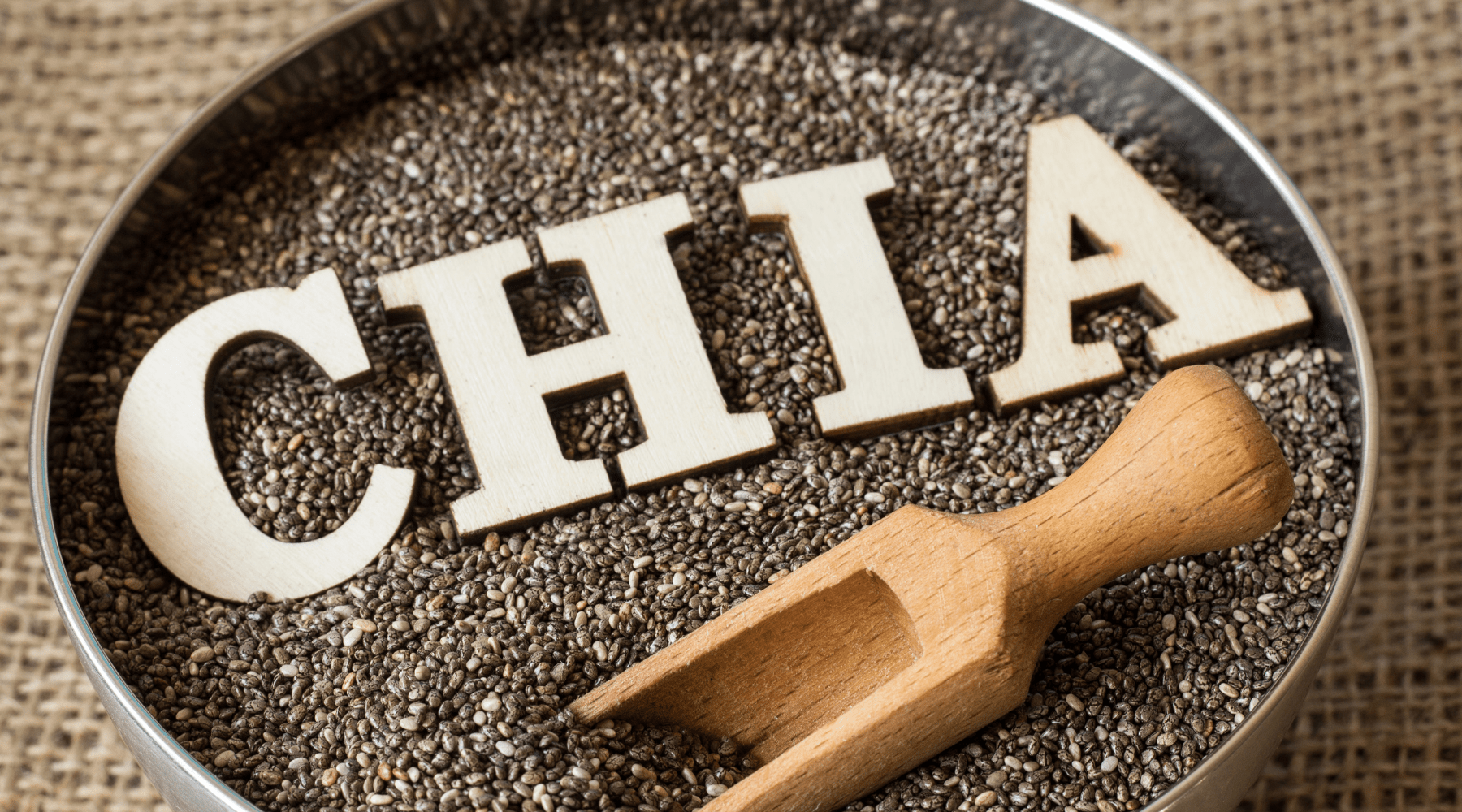
You may have noticed these tiny little seed called "Chia seeds" on the shelves in grocery stores, or seen them used in a recipe that looks a bit too weird to your liking.
But what are chia seeds? What are their benefits? Why are chia seeds good for you?
Well, chia seeds are often referred to as a "superfood" that packs a punch of nutrients, vitamins, and minerals. Including them daily in your diet has numerous benefits. More on them below!
But first, what are they and how do you include them into your diet?
BENEFITS TO EATING CHIA SEEDS
Chia seeds contain antioxidants such as caffeic acid, chlorogenic acid, kaempferol, and quercetin.
All big words, we know! But these all help reduce free radicals in the body, which cause oxidative stress and cell damage.
The caffeic acid in chia seeds helps to fight inflammation that causes diseases like cancer and other chronic diseases.
Chia seeds also contain ALA (alpha-linolenic acid), a fatty omega-3 acid that balances the omega 3 to omega 6 ratio in the body, helping to reduce inflammation.
Chia seeds have a fantastic nutrient profile. A 1-ounce serving (28.35 grams or 2 Tablespoons) of chia seeds has: Protein: 4.7 grams Fat: 8.7 grams Carbohydrates: 12 grams Fiber: 9.8 grams Sugar: 0 grams Calcium: 14% of the Daily Value (DV) Iron: 12% of the DV Magnesium: 23% of the DV Phosphorus: 20% of the DV Zinc: 12% of the DV Vitamin B1 (thiamine): 15% of the DV Vitamin B3 (niacin): 16% of the DV
Chia seeds contain quercetin that belongs to a group of plant compounds called flavonoids. These flavonoids can reduce the risk of heart diseases.
Chia seeds are also high in fiber and omega-3s (ALA), which in turn can lower blood pressure and may reduce your risk of heart disease.
Due to the fiber content and rich nutrient profile, chia seeds can help regulate blood sugar levels and lower post-meal rises in blood sugar. More studies have to be done, but some evidence is showing the benefits on insulin sensitivity.
Increased fiber intake can help with weight loss, and chia seeds have fiber!
2 Tablespoons of chia seeds provides 11 grams of fiber, a significant portion of the Recommended Dietary Intake (RDI) for women and men — 25 and 38 grams per day, respectively.
Because Chia seeds are so high in fiber, they keep you fuller for longer. The soluble fiber absorbs water which expands in your stomach increasing the feeling of fullness.
Chia seeds contain several bone strengthing nutrients, including calcium, magnesium, and phosphorus.
1 Ounce of chia seeds contains 18% of the RDA (recommended daily allowance) of calcium. When compared gram for gram, it has more calcium than dairy.
The ALA in chia seeds may also contribute to good bone mineral density.
If you follow a plant-based or vegetarian diet, chia seeds are a great way to top up your protein intake. 2 Tablespoons of chia seeds will provide 4.7 grams of protein. A 140-pound person needs about 50 grams of protein a day.


